Introduction
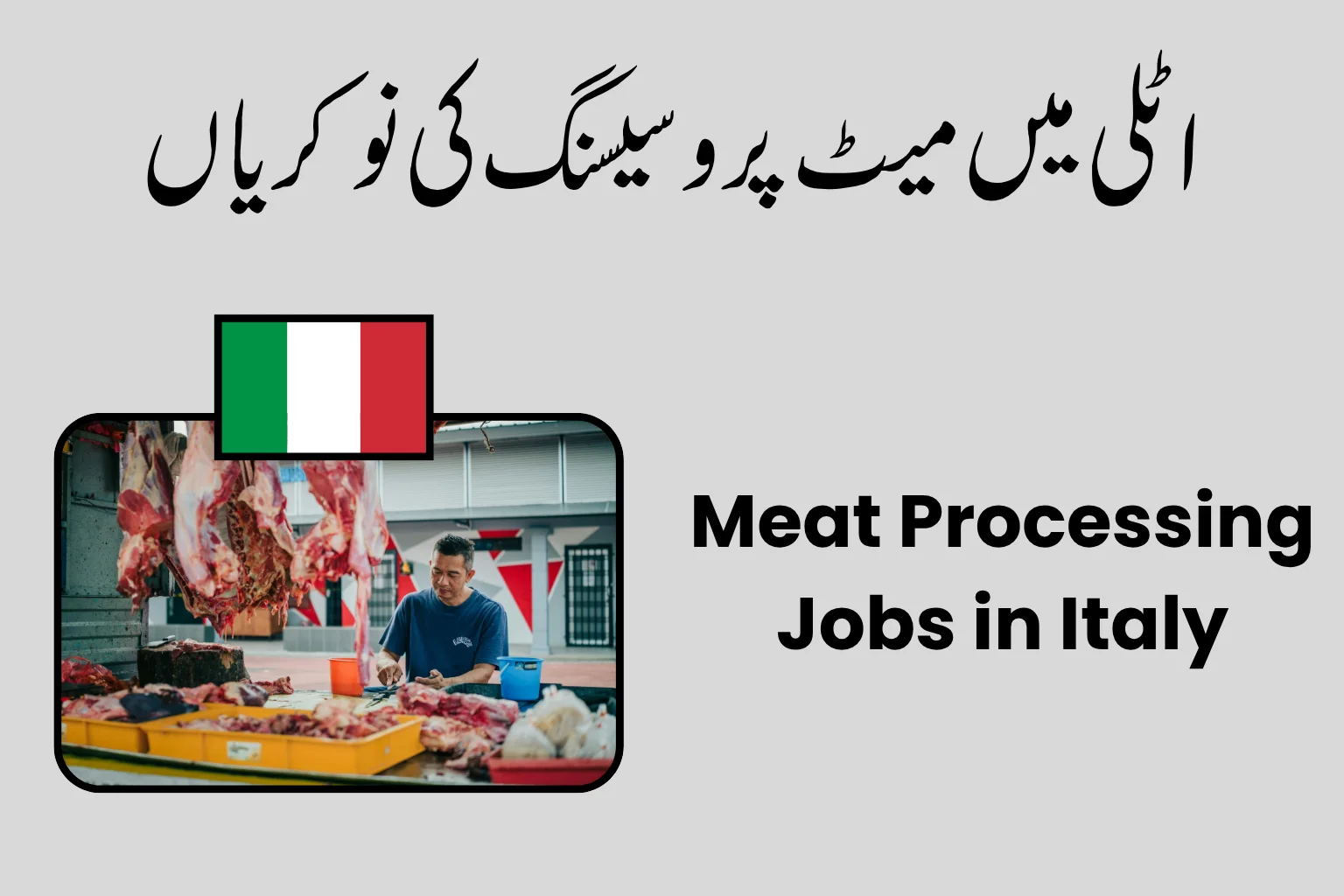
Meat processing jobs in Italy are an important part of the country’s food industry and supply chain. Italy has a strong demand for workers in slaughterhouses, meat packing plants, food factories, and processing units that handle beef, pork, chicken, and packaged meat products.
These jobs are mainly found in industrial zones of Northern and Central Italy, where large food companies operate year-round. Because of labor shortages in manual and factory-based roles, many employers hire foreign workers through legal work permits such as Decreto Flussi.
In 2026, meat processing jobs remain a stable option for entry-level workers looking for legal employment in Europe with steady income and possible visa sponsorship.
Why Meat Processing Jobs in Italy Are a Good Opportunity
1. High Demand in Food Industry
Italy is one of Europe’s major food producers. Meat factories operate continuously to supply supermarkets, restaurants, and export markets.
2. Entry-Level Friendly Jobs
Most positions do not require higher education or experience. Basic training is provided on the job.
3. Stable Income
Workers receive fixed monthly salaries with overtime, night shift bonuses, and weekend pay.
4. Legal Work Opportunities for Foreigners
Non-EU workers can apply through Italy’s official quota system (Decreto Flussi) if sponsored by employers.
5. Long-Term Employment Potential
Skilled and reliable workers often get contract extensions or permanent roles.
Types of Meat Processing Jobs in Italy
1. Meat Cutter / Butcher Assistant
Responsibilities:
- Cutting and trimming meat
- Preparing portions for packaging
- Operating cutting tools and machines
- Maintaining hygiene standards
Salary: €1,500 – €2,200 per month ([turn0search0])
2. Meat Packing Worker
Responsibilities:
- Packing fresh and frozen meat
- Labeling and weighing products
- Vacuum sealing and boxing meat
Salary: €2,000 – €2,500 per month ([turn0search1])
3. Slaughterhouse Worker
Responsibilities:
- Assisting in meat processing lines
- Handling animal carcasses (under safety rules)
- Cleaning and sanitizing work areas
Salary: €1,800 – €2,400 per month
4. Production Line Worker (Meat Factory)
Responsibilities:
- Working on automated processing lines
- Sorting meat products
- Quality control assistance
Salary: €1,900 – €2,800 per month
5. Quality Control Assistant
Responsibilities:
- Checking meat quality and hygiene
- Ensuring food safety compliance
- Removing defective products
Salary: €2,000 – €3,000 per month
Average Salary of Meat Processing Jobs in Italy
| Job Type | Monthly Salary | Notes |
|---|---|---|
| Entry-Level Worker | €1,500 – €2,000 | Basic roles |
| Meat Cutter | €1,500 – €2,200 | Skilled cutting work |
| Meat Packer | €2,000 – €2,500 | Factory packing |
| Production Worker | €1,900 – €2,800 | Line work |
| Quality Control | €2,000 – €3,000 | Skilled role |
📌 Some companies also offer accommodation, especially for foreign workers in factory zones. ([turn0search3])
Eligibility Criteria
Basic Requirements:
- Age 18+
- Good physical fitness
- Ability to work in cold environments
- Willingness to handle repetitive factory work
Skills Required:
- No formal education required
- Basic teamwork ability
- Attention to hygiene and safety rules
- Ability to follow instructions
Language:
- Italian not mandatory
- Basic English or Italian is helpful
Required Documents
To apply for meat processing jobs in Italy:
- Valid passport
- Updated CV
- Passport-size photos
- Job offer letter
- Work contract
- Work permit approval (Nulla Osta)
- Medical fitness certificate (sometimes required)
Work Visa Requirements (Non-EU Workers)
Most foreign workers enter Italy through the Decreto Flussi system, which allows companies to hire workers from outside the EU.
Visa Process:
Step 1: Job Offer
Employer in Italy hires you.
Step 2: Work Authorization
Employer applies for Nulla Osta (work permit).
Step 3: Visa Application
Apply at Italian embassy in your country.
Step 4: Travel to Italy
After approval, you can travel legally.
Step 5: Residence Permit
Apply after arrival for legal stay.
📌 Meat processing is often included in industrial and food manufacturing labor quotas.
How to Apply for Meat Processing Jobs in Italy
Step 1: Prepare CV
- Keep it simple
- Mention physical or factory experience
- Highlight reliability and stamina
Step 2: Search Job Portals
Use trusted websites:
- https://www.indeed.it
- https://it.indeed.com
- https://www.linkedin.com/jobs
- https://www.manpower.it
- https://www.randstad.it
Step 3: Apply to Companies
Target:
- Meat processing factories
- Food manufacturing plants
- Packaging companies
- Recruitment agencies
Step 4: Interview Process
- Basic interview
- Health and safety questions
- Availability for shift work
Step 5: Work Permit Sponsorship
Employer applies for visa approval.
Step 6: Visa & Travel
- Apply at embassy
- Wait for approval
- Move to Italy legally
Top Regions for Meat Processing Jobs in Italy
- Emilia-Romagna (food industry hub)
- Lombardy (industrial factories)
- Veneto (meat & food processing plants)
- Piedmont (agro-industrial zones)
- Tuscany (food production units)
Benefits of Meat Processing Jobs in Italy
- Legal work in Europe
- Stable monthly salary
- Overtime earning opportunities
- Training provided by companies
- Accommodation in some cases
- No higher education required
- Long-term job potential
Challenges
- Cold working environments
- Physically demanding work
- Repetitive tasks
- Strict hygiene rules
- Shift-based schedules (including night shifts)
Despite challenges, these jobs are stable and widely available in Italy’s food industry.
FAQs
1. Do I need experience for meat processing jobs in Italy?
No, most jobs are entry-level and include training.
2. Can foreigners apply for meat processing jobs?
Yes, through employer sponsorship and visa programs like Decreto Flussi.
3. What is the average salary?
Between €1,500 and €2,800 per month depending on role and experience.
4. Is Italian language required?
Not mandatory, but basic Italian helps.
5. Are accommodation facilities provided?
Many companies provide housing or support for foreign workers.
6. Is this permanent or seasonal work?
Both options exist, but many roles are long-term or renewable contracts.
Conclusion
Meat processing jobs in Italy offer a solid opportunity for workers seeking stable employment in Europe’s food industry. With strong demand, entry-level requirements, and legal visa pathways like Decreto Flussi, these jobs are accessible to many foreign applicants.
If you are physically strong, disciplined, and ready for factory-based work, meat processing jobs can provide reliable income and a pathway to long-term employment in Italy.
Now is the right time to prepare your CV, apply through trusted job portals, and secure your opportunity in Italy’s growing food processing sector.